
Green hydrogen has established itself as one of the key drivers for accelerating the decarbonisation of the economy. Its ability to be produced from renewable sources, store energy, and subsequently be used in various applications makes it a strategic solution for advancing towards a cleaner, more flexible, and resilient energy model.
However, for green hydrogen to reach its full potential, further advances are still needed in more efficient, competitive, and sustainable technologies. Cost reduction, improved performance, decreased reliance on critical materials, and validation under real-world conditions are some of the major challenges that will shape its evolution in the coming years.
In this context, it is born GENHESIS, the project “Green Hydrogen Enabling Electrolyser and Fuel Cell Technologies as an Energy Carrier”, in which participates Regenera next to Hydrogreen Energy, with the collaboration of research centres CETENMA y UPCT.
The objective of GENHESIS is to develop and validate technologies that fully cover the green hydrogen value chain: from its production by electrolysis to its energy utilisation through fuel cells. To achieve this, the project envisages the development of an AEMWE electrolyser prototype of at least 1 kW power and the scaling up of fuel cells to reach a minimum power of 3 kW.
This combination allows us to move towards a technological solution capable of producing renewable hydrogen from surplus energy, storing it, and subsequently using it to generate electricity when needed. This proposal is particularly relevant for industrial applications, consuming facilities, energy backup systems, and environments where supply security is a critical factor.
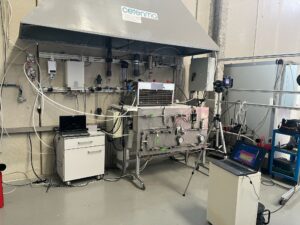
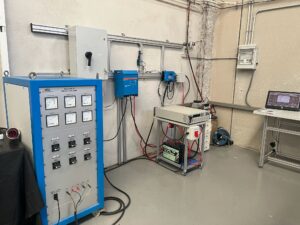
What is GENHESIS and why is it relevant for the future of green hydrogen
GENHESIS is part of the drive to innovate the renewable hydrogen value chain. Its approach responds to a specific need in the energy sector: to turn green hydrogen into a viable, scalable solution applicable to real-world scenarios.
The project focuses on technologies with high development potential, such as AEM electrolysers. This technology, based on anion exchange membranes, represents a highly interesting avenue within the field of electrolysis, as it can contribute to improving the competitiveness of hydrogen production systems and reducing dependence on certain critical materials.
Unlike approaches focused solely on one part of the process, GENHESIS tackles green hydrogen from a comprehensive perspective. On one hand, it works on the generation of hydrogen using an electrolyser powered by renewable energy. On the other, it develops and validates a fuel cell capable of transforming that hydrogen into useful electricity.
This approach allows us to demonstrate the potential of green hydrogen as an energy carrier: a way to store renewable energy and recover it later to meet specific consumption needs, reinforce energy autonomy, or provide backup in case of an electricity grid failure.
A 1 kW AEM electrolyser for producing renewable hydrogen
One of GENHESIS's main developments is the AEMWE electrolyser prototype with a power of at least 1 kW. This equipment is designed to produce hydrogen through electrolysis, using electricity from renewable sources.
Electrolysis allows water molecules to be separated into hydrogen and oxygen using electrical energy. When that electricity comes from clean sources, the resulting hydrogen is considered green hydrogen. In this process, the electrolyser is a key component: a large part of the system's viability depends on its efficiency, durability, cost, and integration capacity.
The development of an AEM electrolyser within GENHESIS allows for exploration of a technology with scope for improvement and high interest for future industrial applications. Compared to other more established alternatives, AEM technology opens the door to designs based on lower-cost components and with less environmental impact, a fundamental aspect for facilitating the deployment of green hydrogen on a larger scale.
Furthermore, the project is not limited to the equipment's design. The electrolyser has already been validated in the laboratory and is currently undergoing validation in a relevant environment. This step is essential to verify its performance under conditions closer to those it might encounter in a real-world application.
3 kW Fuel Cells: Turning Hydrogen into Useful Energy
The second major line of work for GENHESIS is scaling up fuel cells developed in previous projects to achieve a power output of at least 3 kW.
Fuel cells allow hydrogen to be transformed into electricity through an electrochemical process. Unlike other generation systems, no combustion occurs, which allows energy to be obtained cleanly, silently, and efficiently.
In the case of GENHESIS, this technology is proposed as a solution for re-electrification and energy backup applications. In other words, previously produced hydrogen can be stored and used later to generate electricity when needed.
This approach is particularly interesting in installations with renewable energy generation. At certain times, there can be a surplus of energy that is not immediately consumed. GENHESIS explores how that surplus can be converted into hydrogen, stored, and subsequently used via a fuel cell.
The 3 kW fuel cell developed in the project reinforces this full-cycle vision. It's not just about producing green hydrogen, but about demonstrating how it can be used practically to provide energy in real-world scenarios.
A complete chain: production, storage and energy recovery
One of GENHESIS's core values is its integrated approach. The project addresses green hydrogen as part of a complete energy system, not as an isolated technology.
This chain includes three fundamental stages. The first is the production of hydrogen through electrolysis powered by renewable energy. The second is its intermediate storage. The third is its energy utilisation via a fuel cell, which allows it to be converted back into electricity.
This approach is particularly valuable for addressing one of the major challenges of renewable energies: their variability. Technologies such as solar photovoltaics or wind power do not always generate energy at the same time as demand exists. Green hydrogen makes it possible to harness renewable surpluses and transform them into a storable resource, available for later use.
In this way, GENHESIS contributes to developing solutions that can improve the integration of renewables, increase the energy autonomy of facilities, and reinforce supply stability.
More sustainable materials and less reliance on critical resources
The sustainability of green hydrogen doesn't solely depend on the electricity used to produce it being renewable. It's also necessary for the associated equipment and components to evolve towards more efficient, accessible, and environmentally responsible models.
In this regard, GENHESIS incorporates particularly relevant advances. The project works with innovative components based on lower-cost and lower-environmental-impact materials, such as GDLs eCoCell and the Esparto cellulose membranes.
These developments allow for a significant reduction in dependence on critical and costly materials, while maintaining a focus on performance, scalability and sustainability. This is a key line of work for green hydrogen to advance towards more competitive solutions with greater potential for industrial implementation.
The incorporation of alternative materials also reinforces an increasingly important idea in the sector: the energy transition is not just about producing clean energy, but about doing so through technologies that are more sustainable throughout their entire lifecycle.
Laboratory and relevant environment validation
GENHESIS has reached significant milestones in its development. To date, the main project objectives have been achieved, with the satisfactory development of both the proposed electrolyser and fuel cell.
Both technologies have been validated in the laboratory and are currently in the validation phase in a relevant environment. This advance brings technological developments closer to more realistic operating conditions.
Laboratory validation allows for the verification of the technical functionality of equipment under controlled conditions. Validation in a relevant environment, on the other hand, introduces more dynamic and demanding conditions, which helps to assess its behaviour in scenarios closer to real-world application.
In emerging technologies such as green hydrogen, this process is key to reducing uncertainties, improving system design, and moving towards future industrial applications.
Furthermore, the developed solutions have demonstrated their ability to produce hydrogen from surplus energy and integrate into consumer facilities with the aim of supplying energy in the event of an electricity grid failure.
Applications: renewable surpluses, energy backup, and resilience
One of the great values of green hydrogen is its capacity to act as a bridge between renewable generation and energy demand. GENHESIS works precisely in that direction, evaluating use cases that allow for the study of the viability of the developed equipment.
Among the most relevant applications is the production of hydrogen from renewable surpluses. When a facility generates more energy than it consumes at a particular time, that surplus can be used to produce hydrogen through electrolysis. Subsequently, the stored hydrogen can be converted back into electricity using a fuel cell.
This model could be particularly interesting for industrial installations, critical infrastructure, or systems requiring greater energy security. In the event of a power grid failure, stored hydrogen can become a backup source, providing continuity of supply and reinforcing the facility's resilience.
GENHESIS also considers the study of water usage for electrolysis from unconventional sources, a relevant line of analysis for adapting these solutions to different territorial, industrial, and environmental contexts.
The role of Regenera in energy innovation
Regenera's participation in GENHESIS aligns with its commitment to innovative, sustainable energy solutions that are applicable in real-world environments. The project is part of a broader vision in which energy efficiency, renewable energies, storage, and green hydrogen are integrated as complementary tools to accelerate the energy transition.
In this case, Regenera contributes to driving a solution that not only seeks to demonstrate the technical viability of renewable hydrogen but also to bring it closer to practical applications with industrial potential.
The combination of electrolysers, fuel cells, intermediate storage, and validation in relevant environments represents a significant step towards more autonomous, efficient, and sustainable energy systems.
Furthermore, collaboration with Hydrogreen Energy, CETENMA and UPCT strengthens the value of cooperation between business, technology, and research. Projects such as GENHESIS demonstrate that the energy transition requires solid alliances, specialised knowledge, and the ability to bring innovation from the laboratory to real-world application scenarios.
GENHESIS as an impetus for a new generation of hydrogen technologies
GENHESIS demonstrates the potential of a new generation of green hydrogen-linked technologies. The development of a 1 kW AEM electrolyser and a 3 kW fuel cell allows for progress towards an integral solution covering everything from production to energy utilisation.
The project also reinforces a key line for the sector's future: reducing costs, limiting dependence on critical materials, and validating technologies in conditions increasingly closer to industrial reality.
These advances are essential for green hydrogen to cease being perceived solely as a future promise and to consolidate itself as a real tool for decarbonisation, energy independence and security of supply.
In a context where companies, industries, and institutions are seeking solutions to reduce emissions, optimise their resources, and improve their resilience, projects like GENHESIS are paving the way towards a new energy model.
Conclusion: green hydrogen, innovation and industrial sustainability
GENHESIS represents a firm step forward in the development of enabling technologies for green hydrogen. Through the combination of an AEM electrolyser, a scaled-up fuel cell, more sustainable materials, and validation in relevant environments, the project helps demonstrate that renewable hydrogen can be integrated into real energy systems and add value in industrial applications.
Its approach allows for tackling some of the major challenges of the energy transition: harnessing renewable surpluses, storing energy, reinforcing security of supply, reducing dependence on critical materials, and moving towards more competitive technological solutions.
From Regenera, participation in GENHESIS reinforces the commitment to innovation, energy efficiency and the development of sustainable solutions capable of responding to the real needs of companies, industries and infrastructures.
The energy future demands clean, scalable, and reliable technologies. GENHESIS is moving precisely in that direction: transforming green hydrogen into an increasingly accessible, applicable, and strategic solution for decarbonisation.